
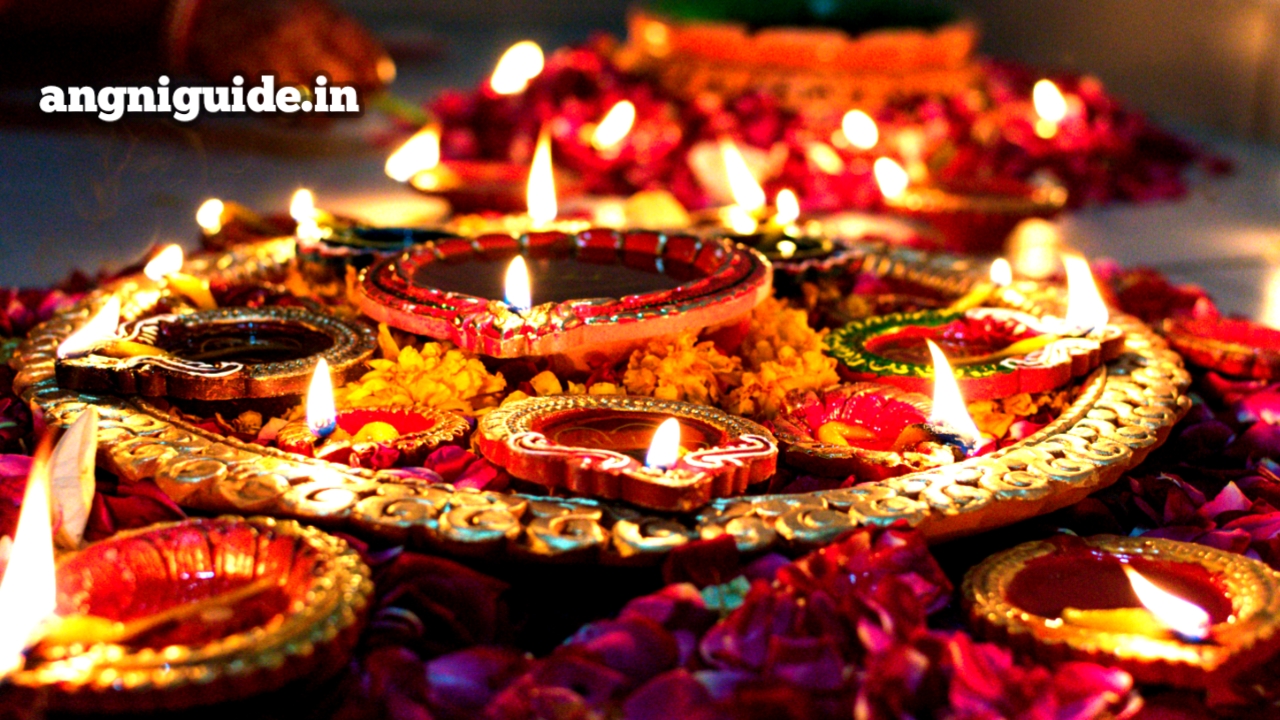
Diwali, also known as Deepavali, is one of the most important and widely celebrated festivals in India. It is known as the “Festival of Lights” and symbolizes the victory of light over darkness and good over evil. The word “Diwali” comes from the Sanskrit word Deepavali, meaning “a row of lights.” The festival usually falls in October or November, depending on the lunar calendar.
Diwali is celebrated by Hindus, Jains, Sikhs, and some Buddhists, each associating it with different historical and religious stories. In Hindu tradition, Diwali marks the return of Lord Rama to Ayodhya after 14 years of exile and his victory over the demon king Ravana. People welcomed him by lighting oil lamps (diyas), which has become a central tradition of the festival.
The celebration lasts for five days. The first day, Dhanteras, is dedicated to wealth and prosperity. The second day, Naraka Chaturdashi or Choti Diwali, marks the defeat of the demon Narakasura. The third day is the main Diwali festival, when people light diyas, burst firecrackers, and worship Goddess Lakshmi, the goddess of wealth. The fourth day marks the beginning of the new year in some regions, and the fifth day, Bhai Dooj, celebrates the bond between brothers and sisters.
Homes are cleaned, decorated with rangoli (colorful floor designs), and illuminated with lamps and fairy lights. Families exchange sweets, gifts, and good wishes while enjoying festive meals together.
Beyond its religious significance, Diwali promotes a sense of community, renewal, and joy. However, in recent years, concerns about pollution caused by firecrackers have led to a shift toward more eco-friendly celebrations.
Overall, Diwali is a time of happiness, spiritual reflection, and togetherness, bringing light and hope into people’s lives.
Also Read:
Best Hospital in Kokrajhar Bodoland
Why is Diwali Celebrated?
Diwali, also known as the Festival of Lights, is celebrated to symbolize the victory of light over darkness and good over evil. It holds religious and cultural significance across different Indian religions, particularly Hinduism.
In Hindu tradition, Diwali marks the return of Lord Rama to Ayodhya after 14 years of exile and his victory over the demon king Ravana. The people of Ayodhya welcomed him by lighting oil lamps, which is why lighting diyas is a key part of the celebration.
In other regions, Diwali is associated with the worship of Goddess Lakshmi, the goddess of wealth and prosperity. It is believed that she was born from the churning of the ocean (Samudra Manthan) on this day. People light lamps to invite her into their homes.
For Jains, Diwali marks the day Lord Mahavira attained nirvana. Sikhs celebrate it as Bandi Chhor Divas, when Guru Hargobind Ji was released from prison. Overall, Diwali is celebrated as a time of spiritual renewal, joy, and the triumph of good.
When is Diwali 2025 in the Indian Calendar?
In 2025, Diwali will be celebrated on Monday, October 20. The date is determined by the Hindu lunar calendar and falls on the 15th day of Kartik, which is also the darkest night of the year, known as Amavasya. This night holds great spiritual importance and is considered highly auspicious for worshipping Goddess Lakshmi, the goddess of wealth, and Lord Ganesha, the remover of obstacles.
The main celebration is marked by Lakshmi Puja, performed in the evening. Families light earthen lamps (diyas) to dispel darkness and invite prosperity into their homes. Houses are decorated with rangoli designs, candles, and colorful lights, creating a warm and festive atmosphere.
Five Days of Diwali 2025
Diwali, the Festival of Lights, is celebrated over five spiritually rich and culturally significant days. Each day holds unique traditions, honoring deities, family bonds, and the eternal triumph of good over evil.
Day 1: Dhanteras – October 18, 2025
The festivities begin with Dhanteras, a day dedicated to Goddess Lakshmi, the goddess of wealth, and Lord Dhanvantari, the divine healer. It is considered highly auspicious to buy new items—especially gold, silver, or utensils—as symbols of prosperity and good fortune. Homes are thoroughly cleaned and beautifully decorated to welcome wealth and positivity into the household.
Day 2: Naraka Chaturdashi / Choti Diwali – October 19, 2025
Also known as Choti Diwali, this day commemorates Lord Krishna’s victory over the demon Narakasura, symbolizing the cleansing of evil and darkness. Traditionally, people take ritual oil baths before sunrise and begin lighting diyas (oil lamps) to purify their homes. Firecrackers and festive lights begin to illuminate neighborhoods, setting the stage for the main Diwali celebration.
Also Read:
Top 10 Best Engineering Colleges in kokrajhar 2026
Sacred Groves And Forest Sanctuary In Meghalaya Tour
Day 3: Diwali – October 20, 2025
The heart of the festival, Diwali, celebrates Lord Rama’s return to Ayodhya after vanquishing Ravana, representing the ultimate triumph of good over evil. In the evening, families perform a Lakshmi and Ganesha puja, seeking blessings for wealth, health, and wisdom. Homes glow with countless diyas and vibrant lights, and the night sky is filled with fireworks, joy, and devotion.
Day 4: Govardhan Puja – October 22, 2025
Govardhan Puja honors the legend of Lord Krishna lifting the Govardhan Hill to protect villagers from torrential rains. Devotees prepare and offer an elaborate array of food—known as Annakut—at temples and homes. Cows, revered as sacred, are also worshipped on this day in gratitude for their nurturing presence in rural life.
Day 5: Bhai Dooj – October 23, 2025
The final day, Bhai Dooj, celebrates the cherished bond between brothers and sisters. Sisters apply a tilak (sacred mark) on their brothers’ foreheads and pray for their long life and prosperity. In return, brothers offer gifts and blessings. The day is filled with affection, sweets, and shared memories, marking a heartfelt conclusion to the five-day Diwali celebration.
Muhurat for Diwali Pooja 2025
Lakshmi Puja Muhurat for Diwali 2025
Diwali, the most awaited festival of lights, will be celebrated on October 20, 2025, across India. This sacred day is marked by Lakshmi Puja, where devotees invoke Goddess Lakshmi, the harbinger of wealth, fortune, and prosperity.
Diwali 2025 Laxmi Puja Date and Time
Timings for Lakshmi Puja – October 20, 2025 (Monday)
Amavasya Tithi: Begins at 3:44 PM on October 20 and ends at 5:54 PM on October 21
Pradosh Kaal: From 5:58 PM to 8:25 PM
Vrishabha Kaal: From 7:08 PM to 9:03 PM
Lakshmi Puja Muhurat: 7:08 PM to 8:18 PM
The most auspicious time to perform Lakshmi Puja is during the Sthir Lagna (fixed ascendants in Vrishabha Kaal, which ensures that the blessings of Goddess Lakshmi remain in the home. Performing the puja between 7:08 PM and 8:18 PM aligns with this period and is considered highly beneficial for attracting wealth, peace, and stability.
During this time, families gather at homes and workplaces to perform rituals with devotion—lighting diyas, offering sweets, and chanting mantras to welcome the goddess into their hearts and homes.
Diwali Holidays Across India – 2025
Diwali 2025 Holidays Announced for Schools in Various States Across India
October 20, 2025, is a public holiday in many states across India, marking the peak of Diwali festivities. States such as Delhi, Uttar Pradesh, Gujarat, and Haryana often declare extended holidays for Govardhan Puja (October 22) and Bhai Dooj (October 23). This allows families to enjoy a full week of celebration, devotion, and togetherness.
Wishing You a Blessed Diwali Season
May this Diwali illuminate your life with joy, prosperity, and peace.
Happy Dhanteras and Happy Diwali to you and your loved ones!
May your home shine bright with love, laughter, and divine blessings.